Thinking about buying land near Prineville? A beautiful parcel can be exciting, but the real question is often not just what the land looks like or what it costs. It is whether the property can support what you want to do with it. If you are planning to build, hold, or invest, this guide will help you understand the local issues that matter most so you can move forward with more confidence. Let’s dive in.
Why land near Prineville needs extra homework
Buying land in the Prineville area is different from buying an existing home. With a house, many of the basics are already in place. With raw land or acreage, you often need to confirm access, utilities, septic feasibility, and zoning before you know what the property can realistically support.
That matters even more in Crook County, where rules can vary depending on whether a parcel is inside Prineville city limits or in unincorporated rural land. A Prineville mailing address does not automatically mean city water, city sewer, or the same development options you might expect in town. The exact location and zoning map designation can change the picture in a big way.
Check access first
One of the biggest mistakes land buyers make is focusing on views, price, or acreage before confirming legal and practical access. In Crook County, access is more than a convenience. It can directly affect whether a parcel is buildable and what steps are needed before improvements can happen.
Crook County land-partition materials state that proposed lots or parcels need at least 50 feet of direct frontage on a street other than an alley. Tentative plans may also need to show streets, structures, utilities, and road improvements. In plain terms, road frontage and access details can affect both cost and timing.
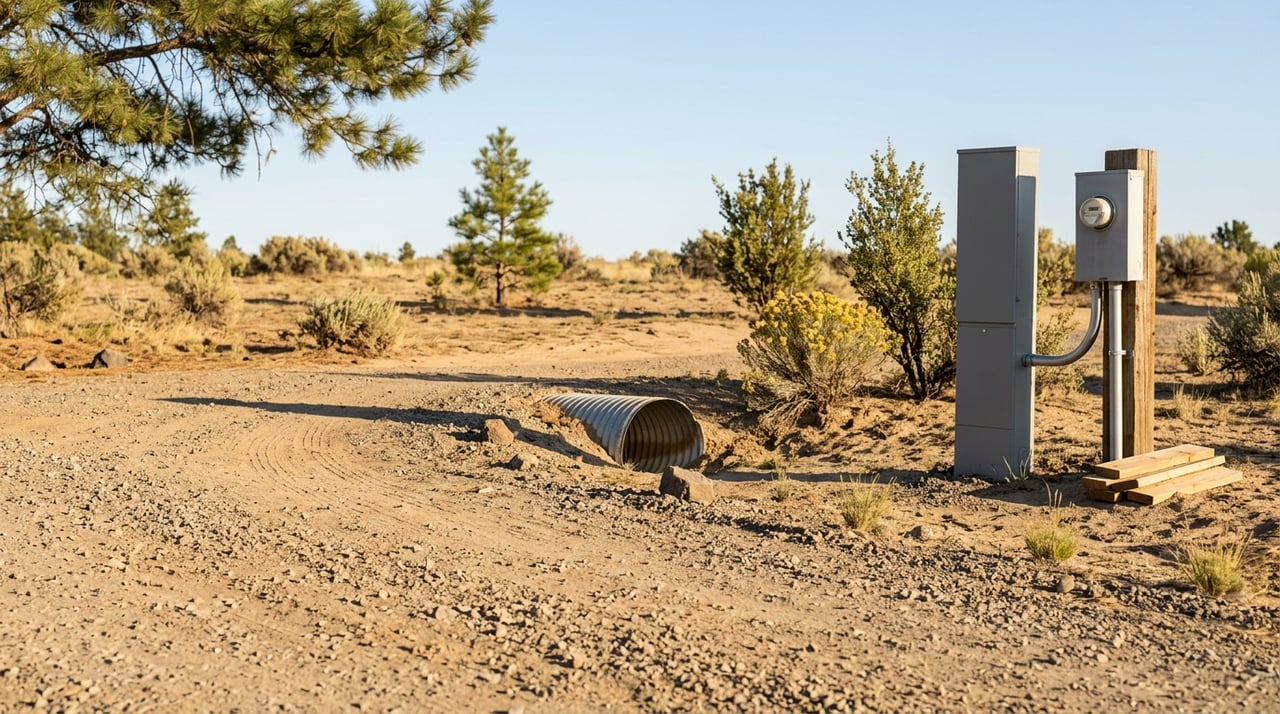
You will also want to know what kind of road serves the property. If access comes from a county road, Crook County right-of-way permits may apply for items such as utility installations, road cuts, driveway repairs, mailboxes, signs, and private water-line installations. If the parcel fronts a state highway, the Oregon Department of Transportation says an access permit is needed for a road or driveway approach.
Private easements add another layer to review. They are not necessarily a problem, but you should understand exactly how access works, what rights come with it, and whether future improvements could require additional approvals. Two parcels that look similar online can have very different access requirements once you start digging.
Access questions to ask early
- Does the parcel have direct road frontage?
- Is access from a county road, state highway, or private easement?
- Will a driveway, road work, or utility trenching require permits?
- Are there any planned improvements needed before building?
Verify utilities parcel by parcel
Utilities are often the biggest dividing line between city land and rural land near Prineville. The City of Prineville states that its municipal water system serves residential, commercial, industrial, and public customers within city limits. Outside those service areas, the property may rely on a well, septic, or other arrangements.
That is why it is important to verify utility availability for the specific parcel instead of assuming based on the address alone. A listing may say Prineville, but the actual utility setup could be very different from one property to the next.
For wastewater, Crook County says rural development without public sewer uses the on-site septic program. The septic process starts with a site evaluation that includes a site plan map and at least three test holes in the proposed drainfield area. The county and DEQ both note that a site evaluation does not guarantee approval for a specific septic system.
If the site is approvable, a separate construction-installation permit is still required. That means septic due diligence should happen early. Waiting too long can create delays or change the true value of a parcel if the site does not support your plans.
What to confirm about utilities
- Whether water is municipal, well-based, irrigated, hauled, or unavailable
- Whether sewer is available or septic will be required
- Whether septic records or prior site evaluations exist
- Whether utility installation work will require permits
Understand wells and water rights
If a rural parcel uses a well, do not stop at asking whether a well exists. Oregon Health Authority materials explain that Oregon Water Resources Department well logs are available for most Oregon wells drilled since 1955. Those logs can include construction details, yield, static water level, and other information that may help you understand the well’s history and setup.
That information can be useful when you are evaluating future performance, maintenance, or whether additional investigation makes sense. A well on paper is not the same as understanding what kind of well you are inheriting.
Water rights are another issue to review carefully, especially if the land includes irrigation or another non-domestic water use. Oregon Water Resources Department states that water rights are not automatically conveyed with ownership changes. Sellers must tell buyers in writing whether a permit or certificate is available and deliver it at closing if it is.
OWRD also states that, with limited exceptions, using water from any source in Oregon generally requires a water right permit or license. If a seller advertises irrigation potential or another water-based use, make sure the supporting documents are part of your review.
Zoning shapes your options
Zoning is one of the most important pieces of the puzzle when you buy land near Prineville. It helps determine what the parcel can support now and what it may support in the future. That includes questions about building, density, and possible division.
Crook County staff reports describing the code identify the R-5 rural residential zone as low-density rural home sites with a 5-acre minimum parcel size. The R-10 rural residential zone is described as low-density rural home sites with a 10-acre minimum parcel size. Those minimums matter if you are comparing parcels for a custom home, future flexibility, or long-term investment goals.
Some land may also be zoned EFU farmland or forestland. If so, the parcel may come with different rules and tax treatment than a buyer expects at first glance. A property that seems ideal for one plan may not line up with its zoning, parcel size, or utility limitations without further approvals.
Why zoning review matters
- It helps confirm whether your intended use fits the parcel
- It affects minimum parcel sizes in some rural residential zones
- It may influence future development or division potential
- It can intersect with septic feasibility and access requirements
Watch for special assessment taxes
Agricultural and forest parcels can bring added tax questions. Crook County’s assessor warns that specially assessed farmland and forestland can carry a potential additional tax that stays with the land after ownership changes. If the land is disqualified from the program, rollback taxes can apply for up to 5 or 10 years depending on the program.
For EFU special assessment, the county says the property must be in an EFU zone and used with the intent to make a profit in farming. If you are buying acreage that has been used in this way, it is smart to ask detailed questions before closing. You want to know not only how the property is taxed today, but also what could trigger a change later.
A smart due diligence plan for buyers
When you buy land, the goal is to reduce surprises before you are fully committed. A clear due diligence process can help you compare parcels more accurately and avoid making decisions based only on appearance or price.
Here is a practical checklist to use as you evaluate land near Prineville:
- Verify the exact zoning for the parcel
- Confirm road frontage and legal access
- Identify whether access is via county road, state highway, or easement
- Check for city water and sewer availability, if relevant
- Request well logs if the property uses a well
- Ask for water-right documents if irrigation or other non-domestic use is involved
- Review septic records and ask whether a site evaluation has been done
- Confirm whether driveway, utility, or road permits will be required
- Ask whether the property has farmland or forestland special assessment
Why local guidance matters
Land purchases often involve more moving parts than buyers expect. You may need answers from county planning, the road department, utility providers, septic records, and state agencies before the full picture becomes clear. That is one reason local guidance can make such a difference.
In a market like Prineville and greater Central Oregon, experience with acreage and land can help you ask better questions sooner. That can save time, reduce stress, and help you avoid chasing a parcel that does not truly fit your goals.
If you are considering land near Prineville and want a steady, practical approach, Mackenzie Licea can help you evaluate the details that matter before you move forward.
FAQs
What should you check before buying land near Prineville?
- You should confirm access, zoning, utilities, septic feasibility, water setup, and any permit requirements tied to the parcel.
Does a Prineville address mean city water and sewer are available?
- No. The City of Prineville serves customers within city limits, so you should verify utility availability for the exact parcel rather than assume based on the address.
What does septic approval involve for rural land in Crook County?
- Crook County says the process begins with a site evaluation that includes a site plan map and at least three test holes, and a separate construction-installation permit is still required if the site is approvable.
Why does zoning matter when buying acreage near Prineville?
- Zoning affects what the parcel can support, including minimum parcel size in some rural residential zones and whether your intended use fits the property.
Can water rights transfer with land in Oregon?
- Oregon Water Resources Department says water rights are not automatically conveyed with ownership changes, so buyers should request the relevant permit or certificate information during the transaction.
Are there extra tax issues with EFU or forestland near Prineville?
- Yes. Crook County says specially assessed farmland and forestland can carry potential additional tax, and disqualification may trigger rollback taxes depending on the program.